
How does concrete sealing protect my concrete?
Cornwell Exterior Cleaning provides concrete sealing in Natchez, MS and the surrounding area to help protect driveways, patios, sidewalks, pool decks, and other masonry surfaces from moisture, staining, and everyday wear. After proper cleaning and surface preparation, we apply a professional sealer designed to help preserve the surface, improve long-term appearance, and make future maintenance easier.
What does concrete sealing do?
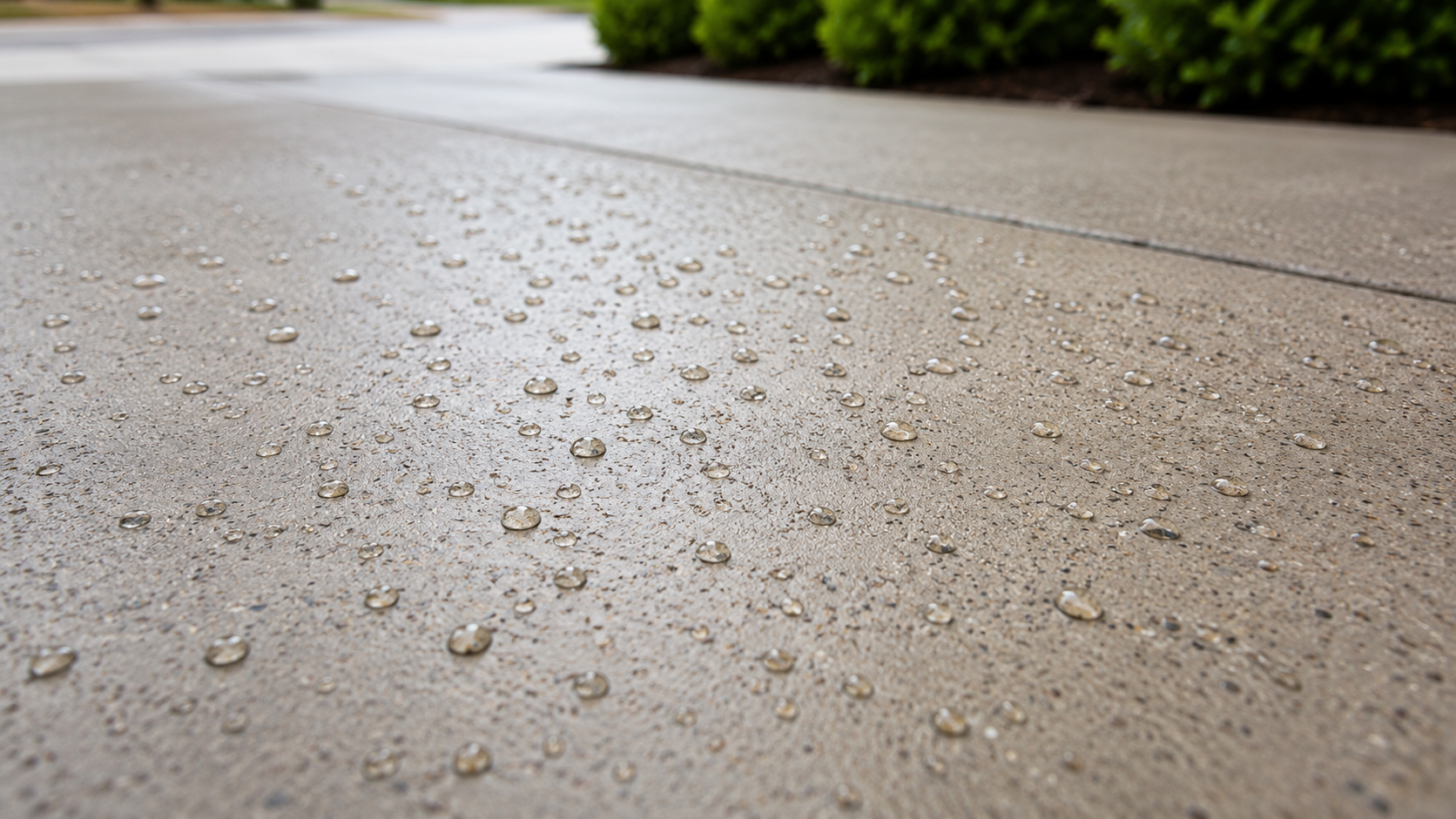
Concrete sealing helps protect porous surfaces from moisture, dirt, stains, weather exposure, and everyday wear. It creates a protective barrier that helps water bead on the surface instead of soaking deep into the concrete.
Will sealing change the look of my concrete?
The sealer I use is designed to dry clear and natural. It does not create a shiny or wet-look finish. In most cases, the concrete will look unsealed until water hits the surface and begins to bead.
What surfaces can be sealed?
Concrete sealing is a good option for driveways, sidewalks, patios, walkways, pool decks, pavers, brick, block, stucco, and other masonry surfaces.
Why should I seal my concrete?
Concrete is porous, which means it can absorb water, dirt, chemicals, and organic growth over time. Sealing helps reduce moisture intrusion, limits staining, slows down surface wear, and makes routine cleaning easier.
Does sealed concrete still breathe?
Yes. A penetrating masonry sealer is designed to help repel water while still allowing the surface to breathe. This helps protect the concrete without trapping moisture underneath a heavy coating.
How long does concrete sealing last?
Longevity depends on the surface, weather exposure, drainage, foot traffic, vehicle traffic, and maintenance. Most sealed surfaces can stay protected for years, but high-traffic areas may need reapplication sooner.
Does the surface need to be cleaned first?
Yes. Concrete should be thoroughly cleaned and allowed to dry before sealing. Proper preparation helps the sealer penetrate better and perform as intended.
Is concrete sealing right for every surface?
Not always. Some surfaces absorb sealer better than others, and previous coatings or contaminants can affect results. A small test area is always recommended before sealing a large surface.
When is the best time to apply concrete sealer?
Concrete sealer should be applied when the surface is clean, dry, and within the proper temperature range. Dry weather is important so the product has time to penetrate and cure properly.
Do you offer concrete sealing as a separate service?
Yes. Concrete sealing can be added after cleaning or quoted as a separate service depending on the size and condition of the surface.